

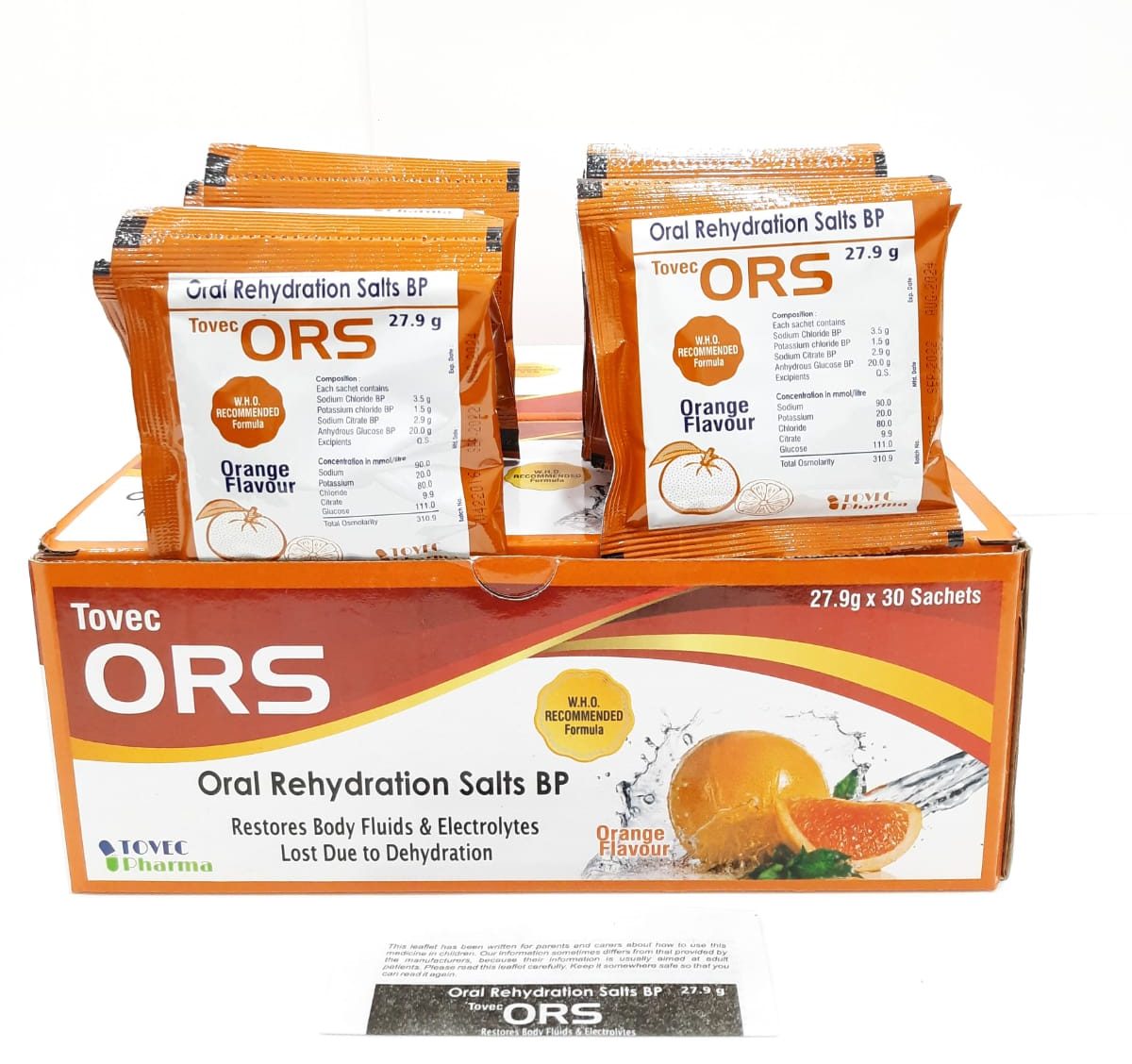
TOVEC ORS Oral Rehydration Salts ORS
Product Name : TOVEC ORS Oral Rehydration Salts ORS
Trade Name : TOVEC ORS
Available Strength : 27.9 g
Packing : 27.9 G X 30 SACHETS
Pack Insert/Leaflet : yes
Therapeutic use : Deficiency of potassium
Production Capacity : 100 million sachets/month
Inquire about TOVEC ORS Oral Rehydration Salts ORSWhat is an oral rehydration solution?
Dehydration happens when your body loses more fluid than you consume. This can happen for many reasons, including excessive diarrhea or vomiting. When left untreated, dehydration can be dangerous. This is because your body relies on water to perform basic functions. Oral rehydration therapy is a treatment for dehydration. It involves drinking a beverage made of water, sugar, and electrolytes, specifically potassium and sodium. The beverage is called an oral rehydration solution (ORS). The goal of oral rehydration therapy is to replenish the body’s fluid levels. It’s typically used to treat moderate dehydration due to diarrhea, vomiting, or other conditions. Read on to learn about the benefits, uses, and side effects of oral rehydration solutions.
How does an oral rehydration solution work for dehydration
In general, mild dehydration can be treated with fluids like water and clear broth. But for moderate dehydration, an ORS might be ideal. In addition to water, ORS contains specific amounts of glucose and electrolytes. The electrolytes are potassium and sodium. These components maximize fluid absorption in the gastrointestinal tract. The gastrointestinal tract relies on sodium-glucose cotransporters (SGLTs), which are carrier proteins in the intestinal cells. Cotransporters help move substances across membranes. Specifically, SGLTs pair together sodium and glucose transport in the small intestine. This allows glucose to increase the absorption of fluids. Additionally, sodium needs glucose in order to be properly absorbed. This is why ORS contains both glucose and sodium. Since 1975, the World Health Organization and UNICEF have used ORS to treat dehydration due to diarrhea. It’s commonly used in countries with limited access to clean water or other hydration options.